
Southfield, MI · Garage Door Service
Is Your Southfield Garage Door Worth Fixing, or Is It Time to Replace It
Southfield homes mostly date to 1938-1990, median 1958. See what that housing stock and cold-climate wear mean for repair-vs-replace calls on your door.
- Repairs & new doors
- Springs & openers
- Serving 8 nearby communities
The Cost of This Job
We can't quote you a number here - what a repair runs depends on the door in front of us, not a zip code average. But we can tell you what drives the cost up or down in a city like this one. Southfield's housing stock runs 1938 to 1990 with a median build year of 1958, so a large share of the doors we get called on are either original hardware from that era or a first-generation replacement installed sometime in the decades after. Original doors often carry obsolete track widths, odd-gauge torsion springs, or hinge patterns that newer rollers and cables don't match without an adapter plate. That drives labor time up even when the part itself is cheap. On the other end, a door that's already been replaced once - say in the 80s or 90s - is more likely to use common spring sizes we stock on the truck, which keeps the job simpler. The honest answer: if your door is original to a house built before 1960, expect us to spend more time matching hardware than fixing the actual failure point. That's not padding the bill - it's the reality of working on a door nobody's made parts for in decades.
What the Weather Here Does to It
This area sits in a severe cold climate band, and that matters more to a garage door than most people think. Steel panels contract in deep cold, which tightens tolerances at the track and can turn a slightly bent roller into a door that binds or jumps off-track overnight. Torsion springs lose a measurable amount of lift strength as temperatures drop, so a spring that was marginal in October can snap outright in January - not because it failed, but because cold finished a job that heat cycling started years earlier. Weatherstripping on doors installed decades ago, when insulation specs were lighter, hardens and cracks faster under repeated freeze-thaw than the vinyl sold today. If your door is original to a house from the 1938-1990 range common here, the weatherstrip has likely already been replaced once or is overdue. None of this means every cold snap breaks a door. It means the margin for error on a door with 60-plus-year-old hardware is thinner here than in a mild climate, and that's the detail worth weighing before you decide a repair is the end of the problem rather than a stop on the way to one.
The Situation
Southfield's housing was built mostly between 1938 and 1990, with a median year of 1958, and that pattern holds across the roughly 51 named areas in this part of the region - most of the stock here predates 1960. That means a lot of garage doors in this service area are either original one-piece or early sectional doors, or a first replacement put in sometime during the home's life. Of the 393,720 households across the service area, 214,132 are owner-occupied houses - the group actually deciding whether to fix or replace rather than call a landlord. Median household income here is $70,185, which puts most owners in a position to choose based on the door's condition rather than being forced into the cheapest option available. That matters for this question specifically: when the hardware is original and the home is pushing 65-plus years old, the honest call is often between a targeted repair that buys a few more years and a full replacement that resets the clock. Neither is automatically right. It depends on how much of the original door - track, springs, panel steel - is still sound versus how much has already been patched.
What Most People Get Wrong
The mistake we see most is treating every broken spring or stuck door the same way, regardless of the door's age. On a door that's maybe 15 years old with a damaged cable, that's a straightforward fix. On an original door from a house built in the 1938-1990 range common here - especially anything near the 1958 median - a broken spring is often the first visible sign that the track, hinges, and panel steel are all at the same age and wearing out together. Fixing just the spring on that door buys you time, not a solution. We'll tell you when that's the case rather than just replacing the part you called about. The other thing people get wrong: assuming a dented panel means the whole door needs replacing. Often it doesn't - a single panel swap is cheaper and faster, provided the manufacturer still makes that panel, which isn't guaranteed on an older door. The limitation we're honest about: if your door is old enough that the original manufacturer's parts are discontinued, we may not be able to match a panel exactly, and that's worth knowing before we start.
Frequently asked questions
How do I know if my garage door is original to the house?
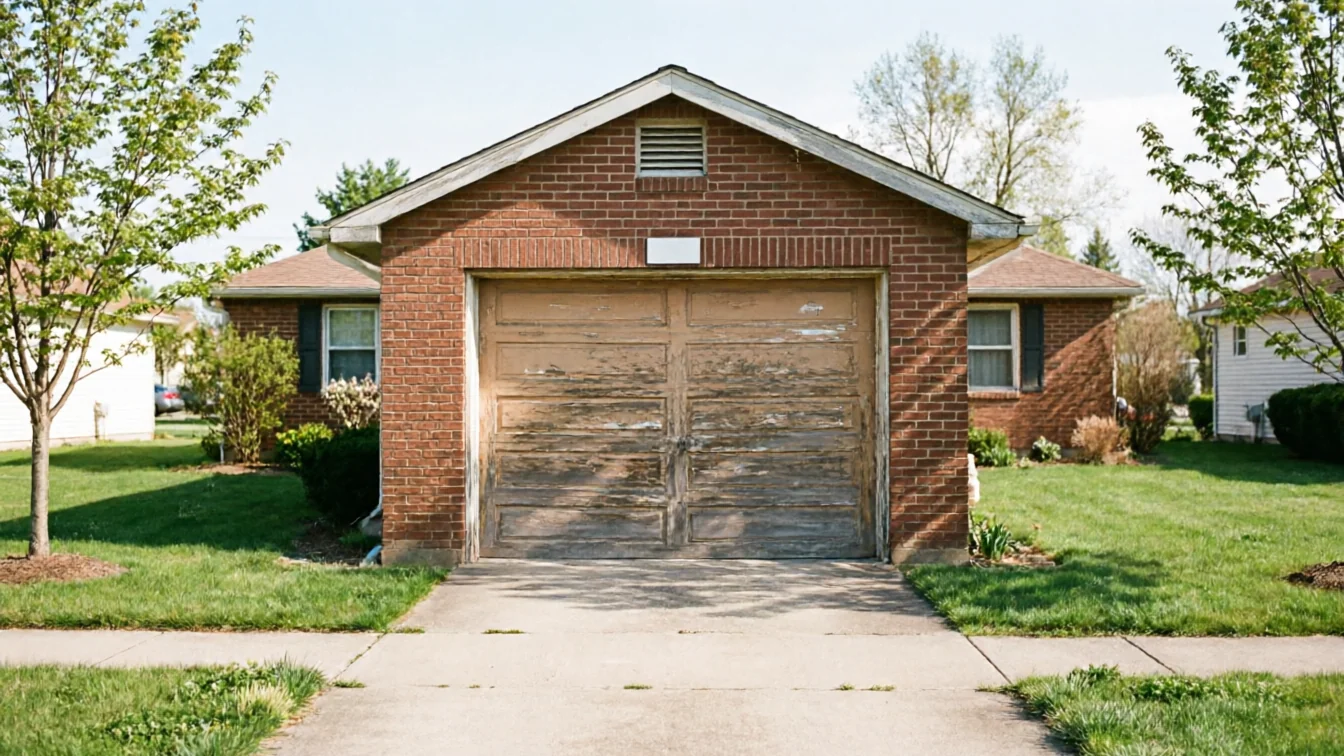
If your Southfield home was built before 1960, which covers a large share of the housing stock here, check for a one-piece swing-up door or a very narrow track - both are signs of original or early hardware. A technician can confirm quickly by looking at the spring mount and track gauge.
Does cold weather actually cause spring failures, or just reveal them?
Both. Southfield sits in a severe cold climate band, and steel contracts and loses some lift strength as temperatures drop. A spring that's been weakening for years from normal cycling is more likely to break on a cold morning than a mild one, so winter often gets blamed for damage that was already building.
Is it worth fixing a door from the 1950s or 60s?
Sometimes. If the track and panel steel are sound and only the spring or a roller failed, a repair makes sense. If multiple parts are wearing out at once - common on doors this age - a repair just delays the next call. We'll tell you which situation yours is in before recommending either.
Related garage door services in Southfield
More garage door guides
Book garage door service in Southfield
Call now or request a quote - tell us what the door is doing and where you are.