
Southfield, MI · Garage Door Service
Attached vs Detached Garage Doors: What's Different in Southfield
Southfield's housing runs 1938-1990, median 1958, and cold-severe winters hit detached garages harder than attached ones. Here's what that means for your door.
- Repairs & new doors
- Springs & openers
- Serving 8 nearby communities
The Cost of This Job
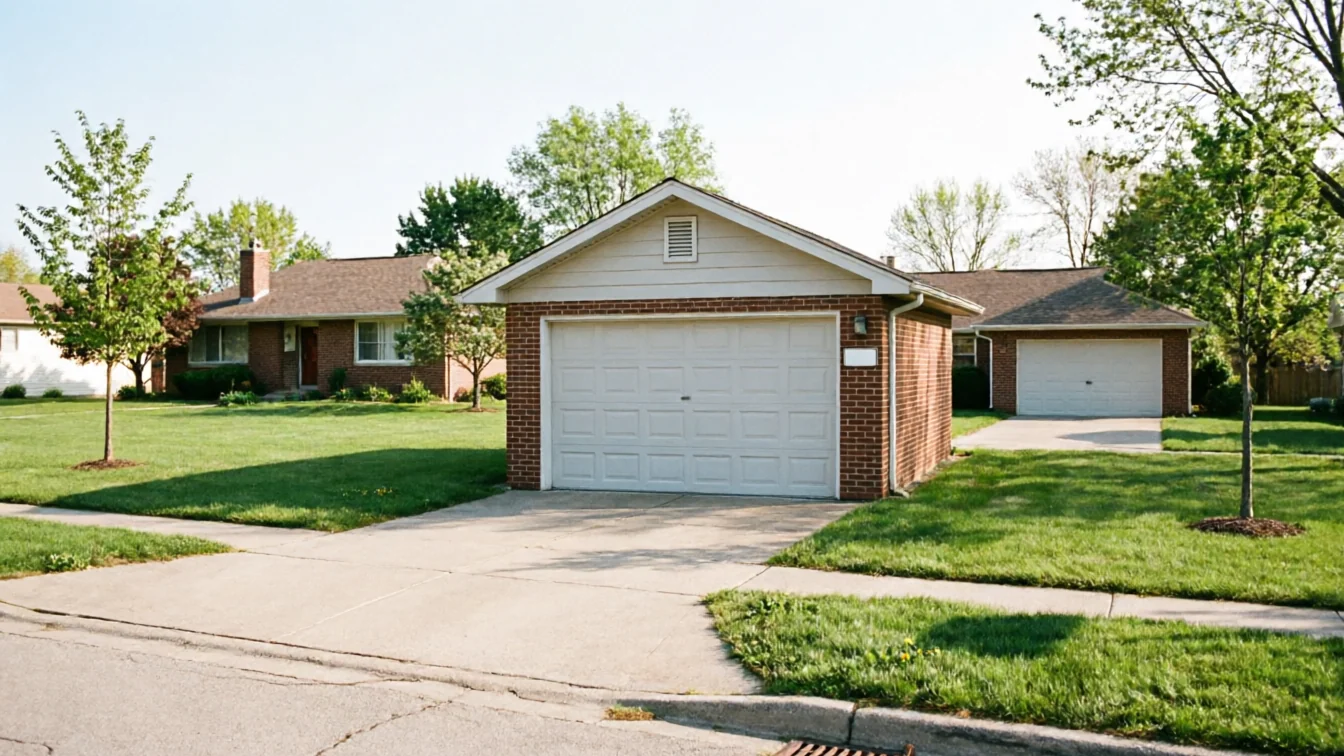
We're not going to hand you a number here, because a door job on a detached garage and the same job on an attached garage can land in different places depending on what's behind the panel - and we haven't seen your door. What we can tell you is what drives the difference. A detached garage built in Southfield's 1938-to-1990 stock often still has its original torsion hardware, and if that shaft or drum has never been touched, a spring job turns into a hardware swap because the parts just aren't made anymore. Attached garages from the same era usually got upgraded opener hardware at some point because they're easier to get to from inside the house, so the labor runs lighter. With 214,132 owner-occupied houses and a median household income of $70,185 across this service area, most calls we get aren't emergencies - they're people who noticed a problem and want it priced before it becomes one. The honest answer is we quote after we look at the door, the track, and what year the garage actually went up, because a 1948 detached structure and a 1985 attached one aren't the same job even if they look similar from the driveway.
What the Weather Here Does to It
Southfield sits in a cold-severe climate band, and that hits a detached garage differently than an attached one. An attached garage shares at least one wall with a heated house, so even with no insulation it picks up some ambient warmth all winter. A detached garage gets none of that. The steel panel on a detached door goes brittle faster in a hard freeze, the bottom seal cracks first, and the torsion spring - especially an original one from the 1938-1990 housing stock this area is built on - loses tension faster when it's cycling through full outdoor cold every single day instead of a buffered range. We see more broken springs and frozen tracks on detached garages through the winter months than on attached ones, and it's not bad luck - it's the structure. If your detached garage door has started groaning before it moves, or the bottom panel won't seal flush anymore, that's the cold working on hardware that was never built with modern weatherstripping in mind.
The Situation
Southfield's housing stock runs mostly 1938 to 1990 with a median build year around 1958, and that's true across the wider stretch of 51 named areas near here - Lathrup Village two miles off, Bingham Farms at three, Beverly Hills and Franklin and Oak Park at four. Most of that stock is pre-1960, which means a lot of garages, attached and detached both, were built before torsion springs were standard and before insulation in a garage door was even a consideration. The detached garage is the one that got left behind on upgrades more often, because it sits apart from the house and doesn't get touched when people remodel a kitchen or finish a basement. Attached garages in this same era usually got a new opener at some point just because it was convenient to swap while other work was happening nearby. So when we show up to a detached garage in this part of Southfield, we're often looking at hardware that's decades past what the door itself would suggest - a newer-looking panel bolted onto an old drum and shaft nobody's replaced.
What Most People Get Wrong
The biggest mistake is treating an attached and a detached garage door the same way for maintenance, because the failure points aren't identical. On an attached door, the opener and track usually fail first since that's the part people never think about until it stops working. On a detached door in Southfield's older stock, the spring and the bottom seal go first because the structure takes the full swing of a cold-severe winter with nothing buffering it. People also assume that because a detached garage looks older, it needs full replacement, when sometimes it just needs the torsion hardware brought current - and assume a newer-looking attached door is fine when the opener logic board inside is the actual problem. We'll say plainly: if your detached garage's spring has already snapped once this year, patching it again usually isn't worth it, and we'll tell you that instead of billing you twice for the same failure.
Frequently asked questions
Does a detached garage door need different maintenance than an attached one in Southfield?
Yes. A detached garage takes the full swing of our cold-severe winters with no heat from the house to buffer it, so springs and bottom seals wear faster. An attached garage usually fails at the opener or track first instead. Given how much of Southfield's housing dates to 1938-1990, both types often still carry original hardware that needs checking before winter.
Why does my detached garage door feel stiffer in winter than my neighbor's attached one?
Because it's not borrowing any warmth from the house. Southfield sits in a cold-severe climate band, and a detached structure sits at outdoor temperature around the clock. If the torsion spring is original to a house built in the 1938-1990 range common here, the cold makes that stiffness worse year over year.
Is it worth replacing an old detached garage door or just fixing the spring?
Depends on the hardware, not just the panel. If the spring's snapped once already and the drum and shaft are original, we'll usually tell you a hardware upgrade makes more sense than a repeat repair. We look at the actual door before saying either way - we don't guess over the phone.
Related garage door services in Southfield
More garage door guides
Book garage door service in Southfield
Call now or request a quote - tell us what the door is doing and where you are.