
Southfield, MI · Garage Door Service
Garage Door Service for St. Clair Shores Homeowners
Southfield Garage Door Pros serves St. Clair Shores homes built mostly in the late 1950s, 19 miles east, with torsion spring and opener repair calls.
- Repairs & new doors
- Springs & openers
- Serving 8 nearby communities
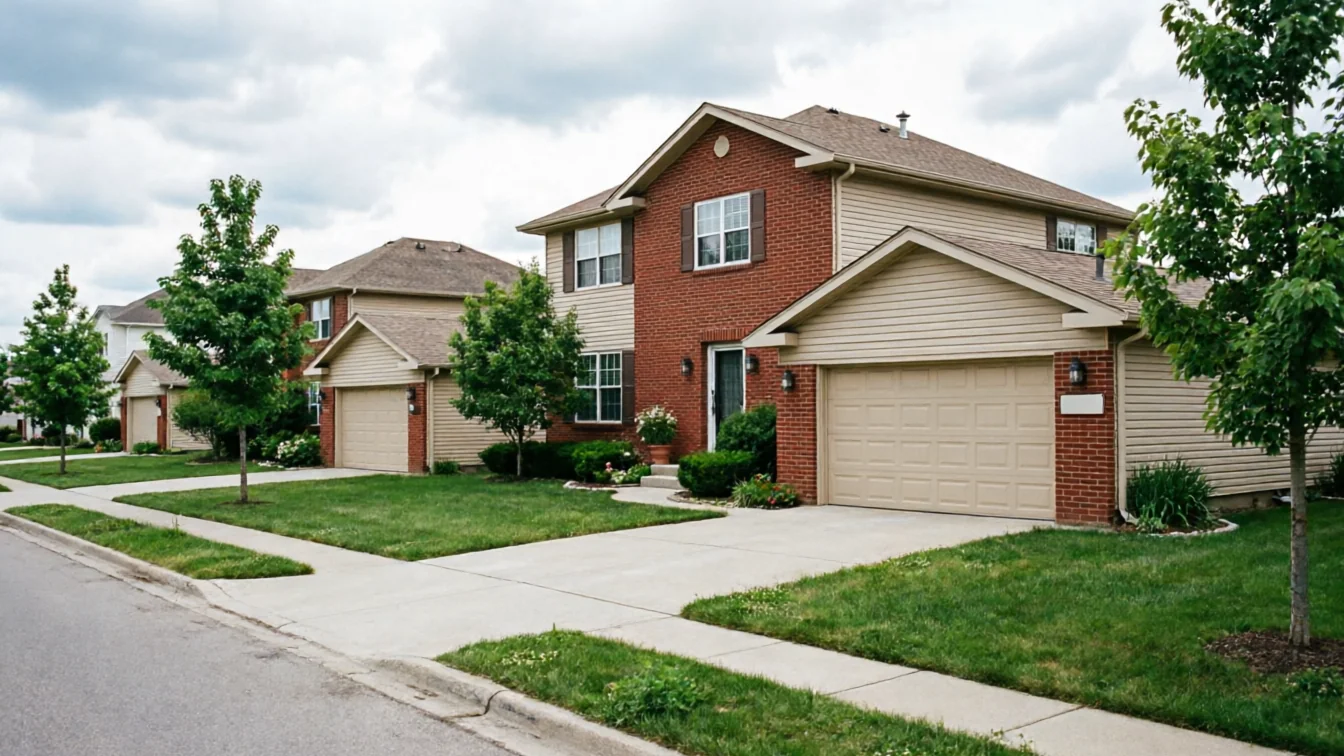
The Houses Here
St. Clair Shores sits at a median build year of 1957, which puts it squarely in the same post-war wave that shaped most of this part of Michigan. That year matters more than the town name does. A garage built in 1957 almost always came with a single-panel, one-piece door on side-mounted track and an extension spring setup bolted to the header, not the torsion bar you'd find on anything built after the 1970s retrofit wave. With 27,495 households in the city, that's a lot of garages still running original hardware or a first-generation replacement from decades back.
We've seen this pattern across the wider region - most of the housing stock in the 51 communities we cover was built before 1960, and St. Clair Shores fits that mold closely. It's not a newer suburb with uniform builder-grade doors. It's older construction, which means more variation in opening sizes, more non-standard track widths, and more doors where the original spring has been swapped at least once by whoever owned the house before.
Median household income here runs $72,693, a notch above what you'll see in some of the older-stock towns closer to Southfield, and that shows up in how often owners replace a door outright rather than patch it again.
Older vs Newer Streets
Not every block in St. Clair Shores dates to the same decade. Streets built closer to 1957 tend to have narrower garage openings, often single-car or a tight 7-foot double, with the original wood jamb never widened. Later infill and additions from the 1970s and 80s brought wider two-car openings and, eventually, torsion springs mounted on a center bearing plate instead of the old side-mount extension coils.
The practical difference: a house on an older street is more likely to need a spring sized for a heavier, older wood-core door, and the track hardware might not match anything sold new. A house on a newer street usually has standard steel sectional panels and common roller sizes, so parts are easier to source and the repair is more routine.
We can't tell you which exact street you're on without seeing the door, and we don't carry a full stock of legacy extension springs on the truck for every call - some of the older setups need a part ordered before the job finishes. That's the honest limit of a drive-out repair on a door that's sixty-plus years old.
When We Can Get There
We run out of Southfield, 19 miles west of St. Clair Shores. That's a real drive, not a local hop, and it means we're not the first call for an emergency where the door is stuck wide open in freezing weather at 6 a.m. We don't claim a depot here and we don't promise a same-hour window - we schedule the trip like any other job on the route that day.
What we can do is plan the call properly. Because the area sits in a severe cold climate band, broken springs cluster in winter when the steel loses flexibility and the extra weight of a cold, stiff door finishes off a spring that was already near the end of its cycle count. If you call ahead of a cold snap rather than during it, we can usually get the visit on the schedule before the door fails outright, instead of after.
The 19-mile distance is just geography. It doesn't change the hardware once we're there - it changes how early you should call.
What That Means for Doors
Put the build year and the climate together and you get a specific failure pattern, not a generic one. A door built around 1957, sitting through decades of severe cold winters, is most often failing at the spring - either an original extension spring that's simply worn out its cycle count, or a torsion retrofit installed at some point whose spring was sized for a lighter door than what's actually hanging on the track now.
Cables fray at the drum on these older setups more than on newer doors, because the drum and cable combination was never updated to match whatever panel replacement happened along the way. Rollers seize in cold weather and crack if the door's forced through ice at the bottom seal.
We repair what's repairable - most spring and cable jobs on a door this old are worth fixing rather than replacing. But if the track is bent, the jamb has shifted with the house, or the panel itself is rotted wood from the original 1957 install, replacement is usually the honest answer, not another patch.
Frequently asked questions
How far is Southfield Garage Door Pros from St. Clair Shores?
About 19 miles. We travel out for scheduled repairs and don't operate a depot in St. Clair Shores, so we build the drive time into the appointment window rather than promising an immediate same-hour arrival.
Why do older St. Clair Shores garages need different parts?
Most houses here were built around 1957, when extension springs on side-mounted track were standard. Later torsion retrofits don't always match the original opening size, so springs and cables often need to be matched to the actual door rather than a generic replacement size.
Does winter cause more breakdowns here?
Yes. The area sits in a severe cold climate band, and cold steel loses flexibility, which is often what finishes off a spring that was already near the end of its cycle life. Calling before a hard freeze rather than during one usually means a faster fix.
Will you always repair instead of replace?
No. Most spring and cable problems on an older door are worth repairing. But if the track is bent, the jamb has moved, or the panel is original 1950s wood that's rotted through, replacement is the straighter answer and we'll say so.
Garage door services in St Clair Shores
Every service our crew runs in St Clair Shores, MI.
Book garage door service in Southfield
Call now or request a quote - tell us what the door is doing and where you are.