
Southfield, MI · Garage Door Service
What Happens to Your Opener When the Power Goes Out in Southfield
Southfield's 1938-1990 housing stock still runs original chain-drive openers, and severe winter outages turn routine power outages into stuck garage doors fast.
- Repairs & new doors
- Springs & openers
- Serving 8 nearby communities
The Cost of This Job
We won't quote a flat number here, because what drives the cost of this job is the opener you've got and the door it's wrestling with, not the zip code. A lot of the houses in this part of the service area went up between 1938 and 1990, median build year 1958, and those garages were built for lighter, single-panel doors - not the insulated two-car slabs that got swapped in decades later. If your opener is original to a house from that era, you're often looking at a full unit swap rather than a part fix, since chain-drive motors from that period weren't built with battery backup in mind at all. Across the roughly 214,132 owner-occupied houses in this service area, median household income sits at $70,185, which covers a mid-range opener with backup power without much strain, but we'd rather say that up front than let a quote surprise you. One honest limitation: if the opener isn't actually the problem and the real fault is a cracked drum or a bent track, replacing the opener alone won't fix the door, and we'll tell you that before we sell you a unit you don't need.
What the Weather Here Does to It
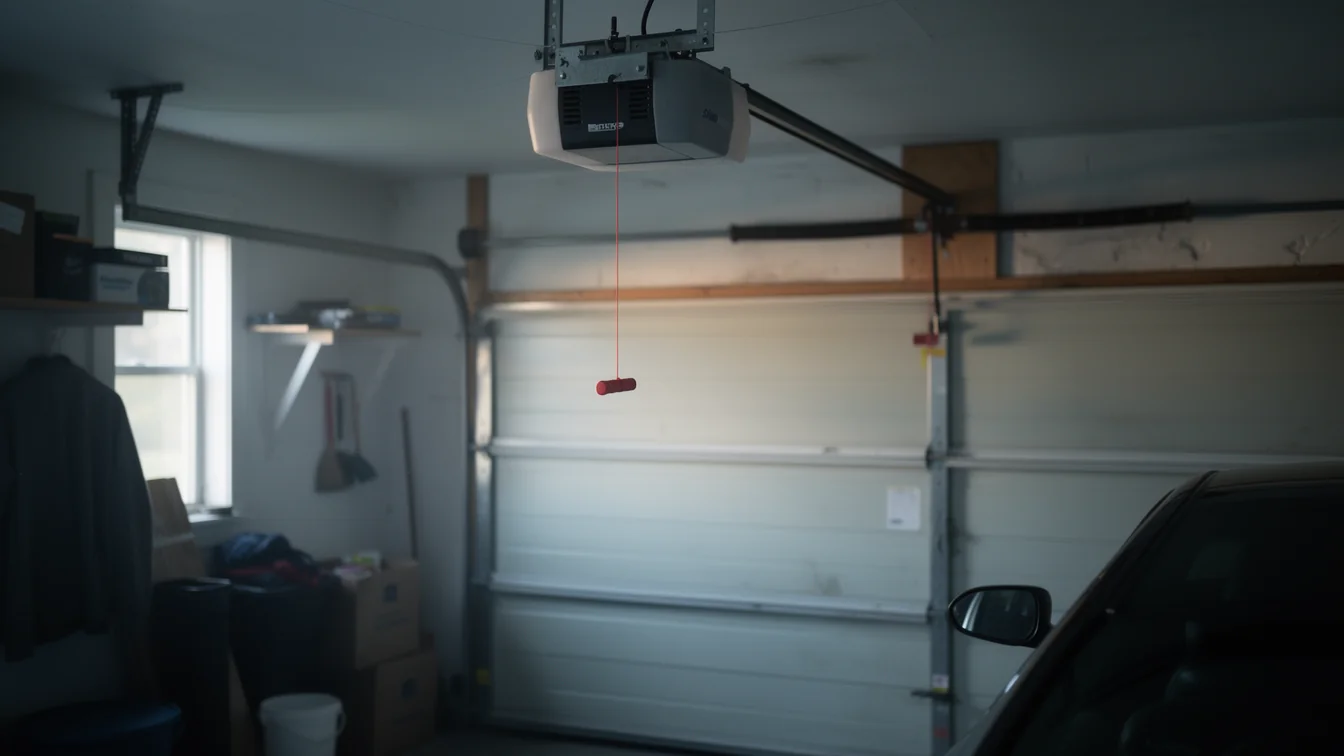
This area sits in a climate band federal data classifies as cold and severe, and that matters more for openers than most homeowners expect. Cold thickens the grease on the drive screw or chain, drags down motor torque, and makes limit switches drift out of adjustment as temperatures swing hard between a January cold snap and a thaw. The bigger issue is what happens during a winter power outage. A chain-drive opener with no battery backup just stops wherever it was in the cycle - door half open, door half closed - and the manual release cord becomes your only way in or out until the power comes back. In houses built in the 1938-1990 window that makes up most of this area's housing stock, that release mechanism is often original, stiff from age, and not something anyone's touched in years. When it does get used mid-storm, it sometimes jams rather than releases cleanly. We see more opener calls in the days right after a hard freeze-thaw cycle than at any other point in the year, and most of them trace back to a power interruption, not a motor that simply died.
The Situation
Most of the garages we get called to sit behind houses built in that narrow 1938-to-1990 stretch, median year 1958, and across the 51 named areas in this part of the region that pattern holds - pre-1960 construction is the norm, not the exception. That means a lot of the electrical runs feeding these openers are original circuits, sized for a single incandescent bulb and a small motor, not for a modern unit with a camera, a battery backup module, and a smart hub all drawing power at once. When an opener from that era finally gives out, it's rarely a surprise failure - it's the end of a motor that's been running on borrowed time for fifteen or twenty years past when anyone expected. The households in this service area - 393,720 total, with 214,132 of them owner-occupied - are mostly dealing with one of two things: an opener that's original to the house and finally quitting, or a newer retrofit unit that was never matched to the old door hardware it's lifting. Both show up the same way on a service call: a door that won't respond, or responds halfway and stops.
What Most People Get Wrong
The biggest mistake we see is assuming the manual release cord will work the same way every time, no matter the weather or the age of the opener. On units original to houses from the 1938-1990 era, that release mechanism hasn't been exercised regularly, and cold makes the linkage stiffer still - pulling it during a storm sometimes jams the carriage instead of freeing it. The second mistake is treating every opener failure as a motor problem when it's actually the door. If the springs are worn or a track is bent, a brand-new opener will strain against the same resistance and fail again within a year. Third, people assume battery backup is optional in this climate. Given how often power outages here coincide with the exact weather that makes a stuck door dangerous - ice on the driveway, a car that needs to get out - backup power is one of the few upgrades we'd call necessary rather than nice-to-have. We'll say plainly: we don't recommend patching a motor that's past its expected service life just to save a service call now, since the second failure usually comes faster than the first.
Frequently asked questions
Why does my garage door opener stop working during a power outage?
Most openers in this area, especially original units in houses built before 1990, have no battery backup, so when a winter storm cuts power, the opener stops wherever it was in the cycle. Without backup power, the only way to move the door is the manual release, which can be stiff on an older unit that hasn't been used in years.
Is it worth replacing an old opener or just repairing it?
If the opener is original to a house built in the 1938-1990 range common in this area, a motor failure at that age is usually the end of its service life, not a one-off part issue. We'll check whether the door's springs and track are sound first, since a new opener on worn hardware just fails again.
Should I add a battery backup to my opener?
Given how often winter power outages here line up with icy driveways and cold snaps, we treat battery backup as close to necessary rather than optional. It keeps the door usable during the exact weather conditions when you most need it to work.
Related garage door services in Southfield
More garage door guides
Book garage door service in Southfield
Call now or request a quote - tell us what the door is doing and where you are.