
Southfield, MI · Garage Door Service
Why Your Garage Door Keeps Jumping the Track in Southfield
A look at why Southfield garages see track failures tied to pre-1960 housing stock and severe winter freeze-thaw cycles, with honest notes on cost and repair.
- Repairs & new doors
- Springs & openers
- Serving 8 nearby communities
The Cost of This Job
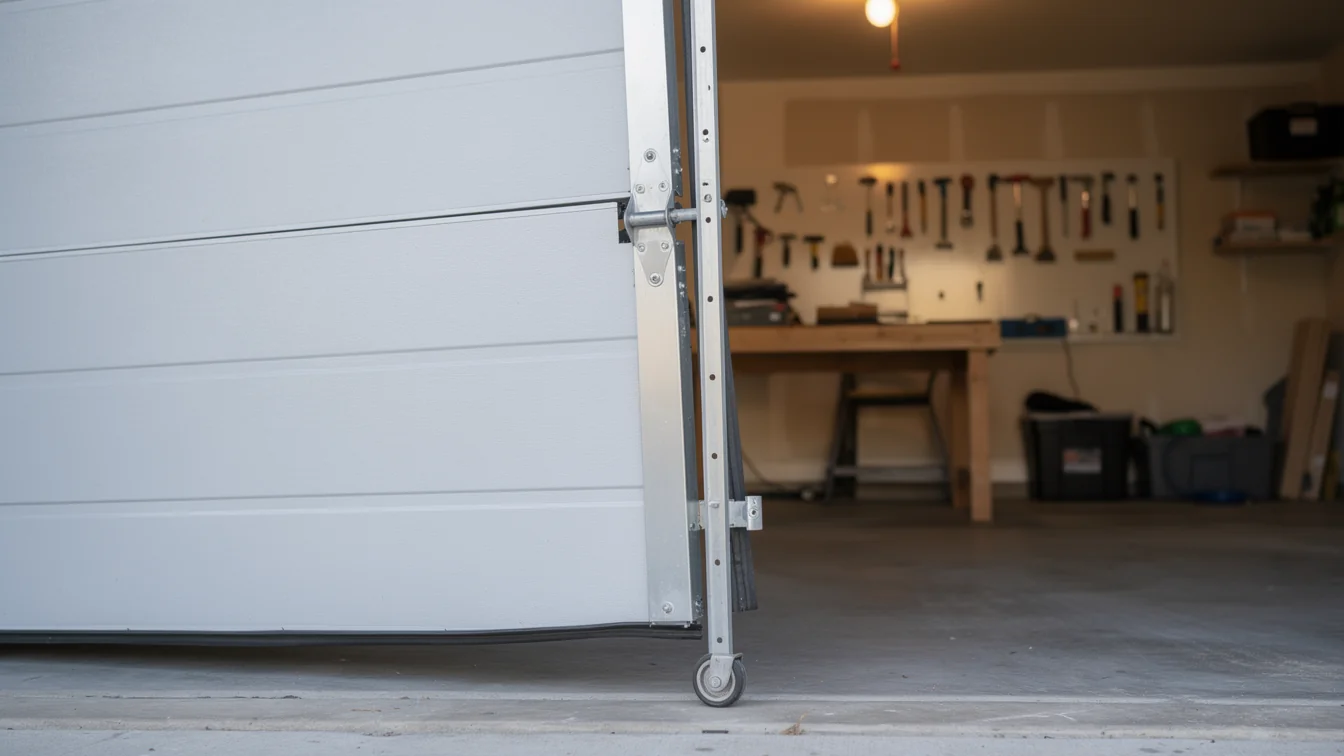
We don't give a number over the phone for an off-track door, and we won't pretend that's just caution - the cost swings hard depending on what's actually wrong. A roller that popped out of a bent section of track is a short visit. A door that's dropped because the track bracket pulled loose from a jamb is a different job, and in a lot of Southfield's older houses that jamb is the original wood framing from the 1938 to 1990 build window this area sits in, with a median build year of 1958. Wood that old doesn't always hold a lag screw the way it used to, so sometimes the fix is re-anchoring the bracket into solid framing rather than just re-hanging the door. Double doors with heavier insulated panels - common where owners have upgraded for the cold - put more load on that same aging hardware, which changes the math too. We look at the track, the brackets, the jamb, and the spring before we say a number, because guessing low and finding rot in the framing halfway through the job helps nobody.
What the Weather Here Does to It
Southfield sits in a climate band classified as cold and severe, and that matters more to a garage door track than most owners expect. Steel track sections and their mounting brackets expand and contract with temperature, and a deep freeze-thaw swing - the kind this area gets repeatedly through a winter - works screws loose in wood jambs a little more each cycle. Grease in the rollers and hinges thickens in sustained cold, which makes the door bind slightly on its way up; bind long enough against a track that's already a few degrees out of true and a roller will eventually jump the rail instead of rolling through it. We also see ice buildup at the bottom track brackets on doors that sit on slab foundations without much thermal break, which can nudge the bottom few feet of track out of alignment over a single hard winter. None of this is dramatic on its own. It's cumulative, which is why a door that tracked fine last spring can be grinding and jumping by February without anything having been hit or forced.
The Situation
This service area covers 51 named communities, and across nearly all of them - from Lathrup Village two miles out to Allen Park fifteen miles south, with places like Berkley, Ferndale, and Royal Oak-adjacent Pleasant Ridge in between - the housing stock is mostly pre-1960. That's not a minor detail for track problems. A door built or last rehung in a house from that era is very likely riding on the original track geometry, sized for a lighter single-layer panel door, not the heavier insulated steel doors a lot of owners have put in since. The brackets were sized for that older load, and over sixty-plus years of seasonal swings they've had a long time to work loose a quarter-inch at a time. With roughly 214,132 owner-occupied houses across this area and a median household income of $70,185, most of the calls we get aren't from people who neglected the door - they're from people maintaining a house and a door that are both older than most of what's sold as 'standard' hardware today.
What Most People Get Wrong
The most common mistake is assuming a track that's visibly bowed is the whole problem. Often the bow is a symptom - a bracket pulled away from the jamb let the track flex, and the flex is what let the roller jump. Straightening the track without re-anchoring the bracket just buys a few weeks before it happens again. The second mistake is trying to muscle the door back onto the track by hand while it's under spring tension. A torsion spring on a loaded door carries real force, and a door that's off-track with the spring still wound is not a safe DIY fix - that's the honest limit here, and it's one we won't talk anyone past on the phone. The third mistake is waiting. A door running slightly misaligned on original 1950s-and-60s-era hardware doesn't fix itself with a quiet winter; it gets a little worse every cold cycle until a roller finally lets go.
Frequently asked questions
Why does my garage door only go off track in the winter?
Cold contracts the steel track and stiffens the grease in the rollers, so a door that's already a little misaligned binds more in winter and is more likely to jump the rail. Southfield's cold-severe climate band makes this a seasonal pattern rather than a one-time event for older hardware.
Is it the track or the bracket that's actually broken?
Usually it's the bracket pulling loose from the jamb, especially in houses from Southfield's 1938 to 1990 building era, where the original wood framing has had decades of freeze-thaw cycles working the screws loose. The bent track you see is often a symptom of that, not the root cause.
Can I push the door back onto the track myself?
Not safely if the spring is still under tension. A torsion spring on a loaded door carries enough force to cause serious injury if the door shifts while you're working near it. This is one job we tell people to leave alone until someone's looked at the spring.
Why does cost vary so much for the same complaint?
An off-track door can mean a popped roller or a failed jamb anchor in original mid-century framing, and those are very different repairs. We don't quote a number until we've seen the track, the bracket, and the condition of the mounting surface.
Related garage door services in Southfield
More garage door guides
Book garage door service in Southfield
Call now or request a quote - tell us what the door is doing and where you are.