
Southfield, MI · Garage Door Service
Garage Door Service for Oak Park's 1958-Era Homes
Oak Park homes date to 1958 on average, with original steel doors and torsion hardware built for a different climate. Southfield Garage Door Pros works this 4-mile route.
- Repairs & new doors
- Springs & openers
- Serving 8 nearby communities
Time on the Job
We run this job from Southfield, four miles down the road, so there's no branch office in Oak Park and we don't pretend otherwise. What that distance means in practice is a short drive, not a local depot - the truck comes from Southfield every time, loaded before it leaves. Oak Park itself is a tight grid of smaller lots built out fast in the 1950s, which means a lot of these calls cluster close together: one torsion spring job on a street often turns into two more within a few blocks, same vintage door, same failure. We don't promise a same-day slot here, and we're not going to invent a response time just to fill the page. What we can tell you is that the drive is short and the houses we see are consistent enough that we usually know what we're walking into before we get the door open.
What Causes It Around Here
Oak Park's housing stock centers on 1958, which puts most of these garage doors and their openers squarely in the pre-1960 bracket that covers most of this part of the region. That means single-layer steel sectional doors or older flush wood doors, sized for the single-car and narrow double-car openings that were standard on these lots - not the wide, insulated doors you'd spec on new construction. The hardware behind them is usually the same age: extension springs bolted to the track rather than a torsion bar overhead, and that layout is why so many of these calls start with a snapped cable instead of a dead opener. The winters here fall in the severe cold band, and forty-plus years of freeze-thaw cycling on original rollers and hinges is what finally does the metal in. None of this is unique to one street - it's the whole era talking.
The Symptom
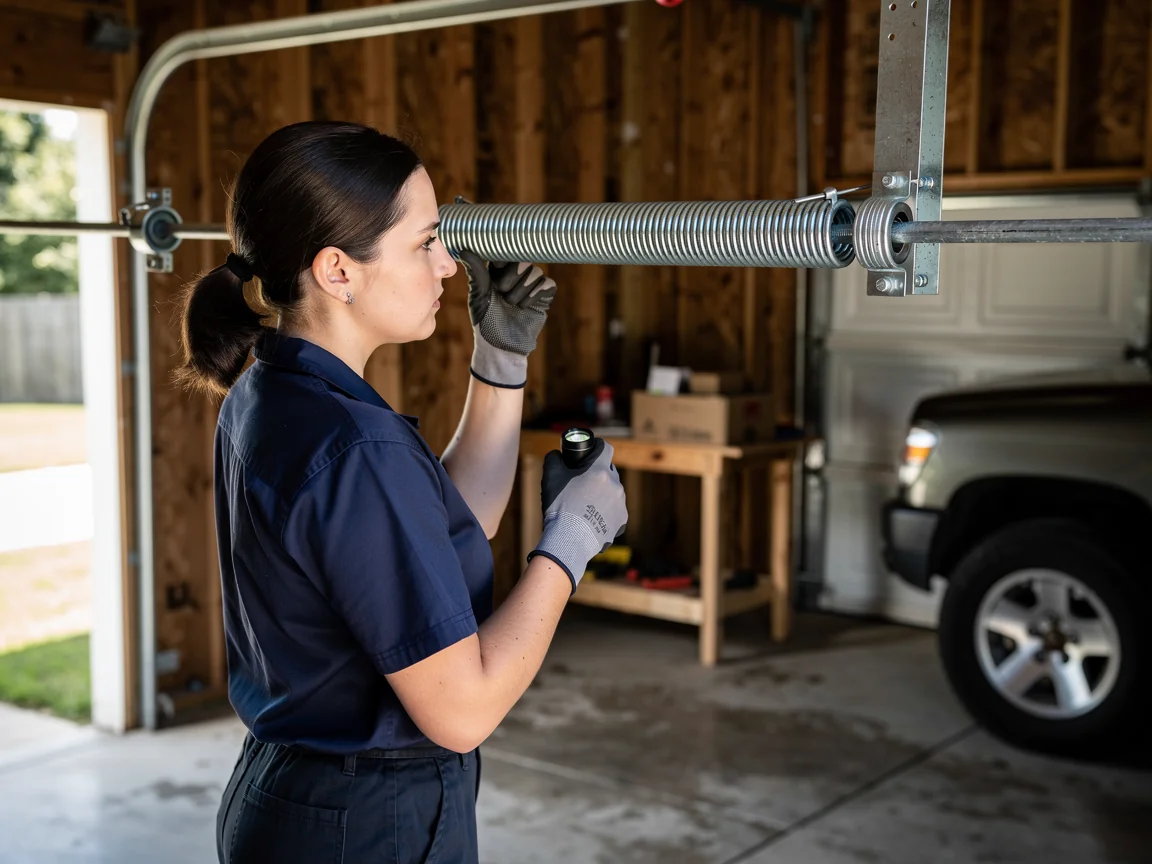
The call we get most from this part of town is a door that slams the last foot of its travel, or won't come down evenly - one side dropping faster than the other. On a door this age, running on worn extension springs instead of a torsion setup, that's almost always a spring that's lost tension unevenly on one side, not a bad opener. People tend to blame the opener first because that's the part with the motor, but on a house built around 1958 the opener is usually the newer component in the system - it's been swapped once already. The spring and the galvanized cable running to a drum older than the opener are what's actually failing. If the door's also dragging or binding partway down, add worn track alignment from decades of settling to the list.
Where This Job Goes Sideways
Here's the honest part: some of these original flush panels and the narrower single-car door sizes common on Oak Park's older lots aren't something we can match off a standard stock panel. If one section is dented or rusted through and the rest of the door is original steel from the 1950s or 60s, we're not going to pretend a replacement panel will blend in - on a door this old, color and profile rarely match anymore. At that point patching one panel costs real money for a visible seam, and a full door swap often makes more financial sense once you're past one bad section. We'll tell you that on site instead of selling a repair that leaves the door looking worse than before we touched it. We don't stock obsolete panel profiles, and we won't claim otherwise.
What Is on the Truck
For a service area with doors this consistently old, we carry what fits 1950s and 60s hardware: standard-gauge extension and torsion springs across common weight ranges, galvanized lift cable, steel rollers and hinges to replace the worn originals, and track sections sized for narrower single-car openings as well as the wider doubles. We also carry opener logic boards and safety sensor kits, since on a lot of these houses the opener is a later addition bolted onto original track - meaning the fix is electrical, not mechanical, more often than people expect. What we don't carry is exact-match steel panels for discontinued flush-door profiles from this era; if that's the job, we'll say so up front rather than make you wait on a part we can't actually get.
Frequently asked questions
Why does my garage door in Oak Park feel heavier or drop unevenly compared to newer doors?
Houses here date mostly to 1958, and doors from that era usually run on extension springs mounted along the track rather than a torsion bar overhead. When one spring loses tension before the other, the door drops unevenly or slams the last stretch of travel. It's a spring issue, not usually the opener.
Do you have a local office in Oak Park?
No. We work out of Southfield, about four miles away, and cover Oak Park from there. There's no separate branch or faster local response time to quote - just a short drive and a crew that sees a lot of this era of door in this part of the area.
Can you match the panel on my original 1950s garage door?
Often not exactly. Flush steel and wood panel profiles from that era are discontinued, and a mismatched replacement panel tends to look worse than the damage it's covering. If one section is bad on an otherwise original door, we'll usually walk you through full-door replacement instead.
Is cold weather actually a factor in these breakdowns?
Yes. This area sits in a severe cold climate band, and decades of freeze-thaw cycling is hard on original rollers, hinges, and spring steel. On a door already pushing 60-plus years old, that cumulative cold exposure is often what finally lets a worn spring or cable go.
More garage door services in Oak Park
Book garage door service in Southfield
Call now or request a quote - tell us what the door is doing and where you are.