Southfield, MI · Garage Door Service
Spring Repair for Dearborn Heights' 1950s Garage Doors
Dearborn Heights homes went up mostly in the 1950s, and a lot of that original torsion hardware is still hanging. Southfield Garage Door Pros drives in for spring jobs.
- Repairs & new doors
- Springs & openers
- Serving 8 nearby communities
Time on the Job
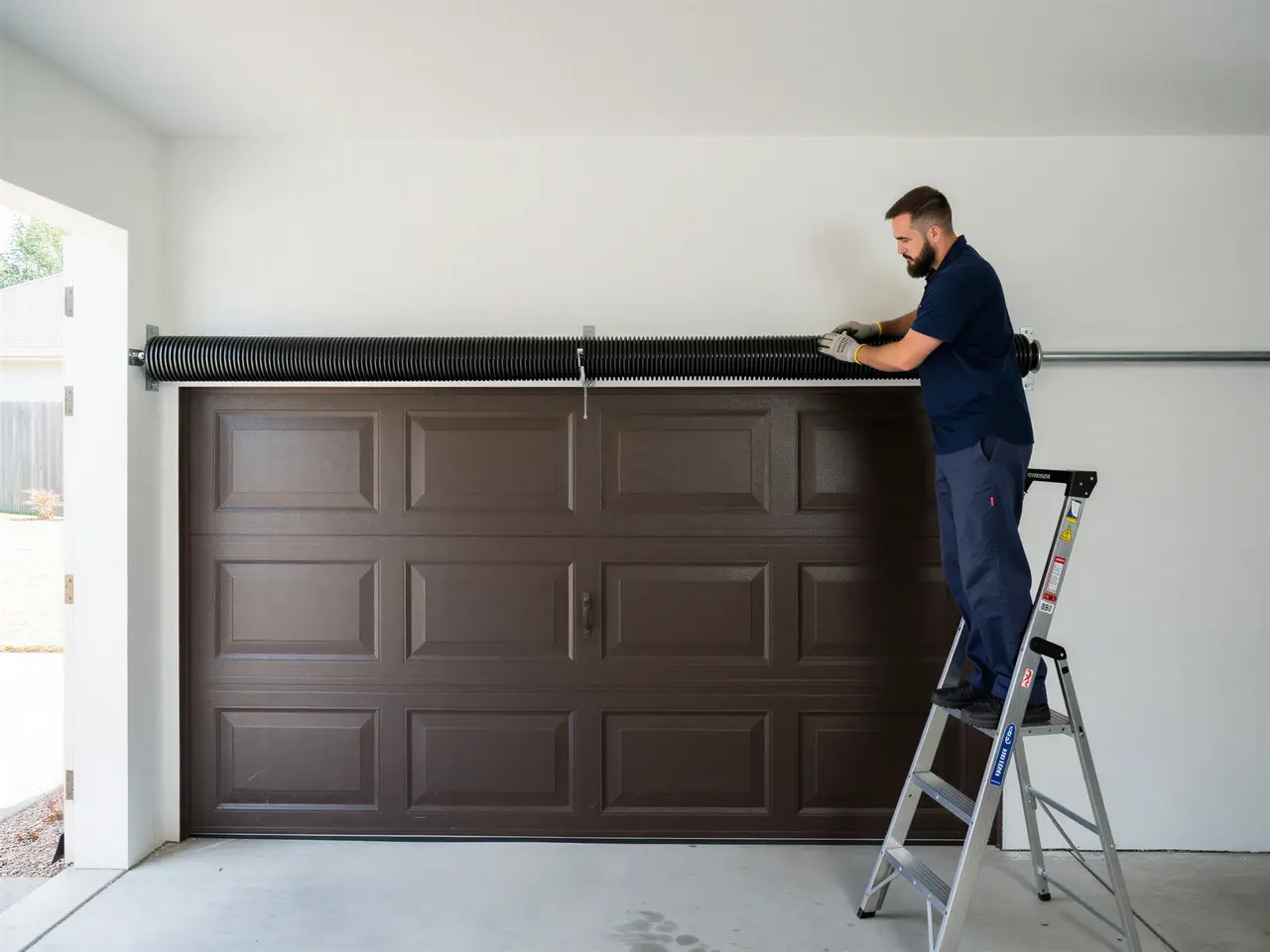
A lot of Dearborn Heights was built out around 1958, and that's not a throwaway stat - it tells us what's probably still hanging over the car. Torsion springs from that era were never meant to run this long. Most manufacturers rate them for 10,000 open-close cycles, which on an average household works out to somewhere around 7 to 10 years. Houses here are pushing seven decades on the original frame, which means a good share of these springs are not on their second or third replacement - they're still the first set, just older and weaker every winter. When we get a call from this side of town, we go in expecting a spring that was wound for a door half this door's current weight in accumulated rust and paint, not a modern torsion unit. That assumption changes how we size the replacement and what we check on the shaft and bearing plates before we touch the winding bar. We're driving in from Southfield, about 10 miles out, so we size the job by phone first - cable condition, drum wear, whether the opener has been straining - so the truck shows up with the right springs instead of a guess.
The Cost of This Job
Dearborn Heights households run a median income of about $61,035, noticeably below the wider Southfield service area's $70,185. That gap matters for how we quote this job: we don't pad a spring call with upsells the door doesn't need. A straight torsion spring replacement on a standard two-car door is priced as that and nothing more. Where the cost moves is age and originality - a 1950s-era door with one working spring and a seized bearing on the other side costs more in labor than a straight swap, because we're fighting corrosion, not just unwinding tension. We'll tell you on site if a cable or roller is close enough to failure that doing it now saves you a second visit. We won't sell you a full hardware kit because the door is old; we sell you what's actually failing.
What Is on the Truck
For this part of the service area we carry a spread of torsion spring sizes that cover both the original narrow-wire springs common on 1950s and 60s doors and the heavier wire used on doors replaced more recently. Original one-piece and early sectional doors here often ran on side-mounted torsion hardware with different drum and shaft dimensions than what's standard today, so we stock adapter hardware alongside the springs themselves - swapping tension without matching the drum means the cable runs crooked within a season. We also carry winding bars sized for stiffer, rust-bound setups, because an original 1958 shaft that's never been greased doesn't turn like a ten-year-old one. What we don't carry on every truck is a replacement for every obscure bracket style - if a door's hardware is genuinely non-standard, we'll tell you that on site rather than force a part that doesn't fit.
Where This Job Goes Sideways
The failure point we see most on original hardware from this build era isn't the spring itself - it's the stationary cone or the bearing plate it's wound against. Cold-climate steel that's sat unlubricated since the Eisenhower administration gets brittle at the mounting points, not just along the coil. A tech who swaps the spring and ignores a cracked cone sends you home with a new spring on an old failure point, and it breaks again inside a year. The other sideways moment is cable drums that were never resized when a door got a heavier insulated replacement panel somewhere along the way - the spring looks right for the door's current weight, but the drum pitch doesn't match the cable gauge, and it binds. Both of these show up more often on original torsion setups than on anything installed in the last twenty years, which is exactly the mix of hardware still common across this part of town.
The Symptom
The giveaway on original torsion hardware from this era is usually a door that won't lift past a foot or two, then the opener motor hums and gives up - that's the opener trying to do a spring's job. On a true spring break you'll often hear it: a bang from the garage, sometimes mistaken for something falling, followed by a door that's suddenly dead weight. Severe cold makes this worse, not better - steel that's already fatigued from six decades of cycles loses flex when it's below freezing, and that's when the last few working coils finally let go. If your door is sagging unevenly on one side rather than refusing to move at all, that's usually one spring still holding while the other has already failed, which is its own kind of urgent.
Doing It Yourself
We'll say this plainly: don't try to rewind or replace a torsion spring yourself. A wound spring under tension has put people in the ER with broken fingers, hands, and worse - it's not a skill-level problem, it's a stored-energy problem. What you can safely check yourself is whether the door is a torsion-spring door (spring on a shaft above the door) or an extension-spring door (springs along the upper tracks), since that changes what a tech needs to bring. You can also look for visible gaps in the coil or a spring that's clearly sagging lower than its mate - photos of that help us quote more accurately over the phone before the truck ever leaves Southfield.
Frequently asked questions
How old does a garage door spring usually get before it fails around Dearborn Heights?
Most torsion springs are rated for about 10,000 cycles, roughly 7 to 10 years of normal use. With a lot of this area's housing dating to the late 1950s, many doors are well past that on their original spring set, especially if it was never replaced. Age alone doesn't mean imminent failure, but it raises the odds every winter.
Will a tech just replace both springs even if only one broke?
Not automatically. If the second spring is similar in age and wear, replacing both at once avoids a second service call soon after, and we'll explain why we recommend it on site. But we don't sell a matched pair just because the door is old - if the second spring checks out fine, we'll say so.
Does cold weather actually affect spring failure here?
Yes. Steel loses some flex in sustained cold, and a spring that's already fatigued from decades of cycling has less margin before a coil gives out. It's not the cause of the wear, but it's often the trigger that finishes off a spring that was already near the end.
Is this covered from a Dearborn Heights location?
No, we run this job out of Southfield, about 10 miles from Dearborn Heights. We don't operate a branch or depot in Dearborn Heights itself, but spring repair is a regular call we take from this part of the service area.
More garage door services in Dearborn Heights
- Garage Door Repair in Dearborn Heights
- Garage Door Service in Dearborn Heights
- Garage Door Maintenance in Dearborn Heights
- New Garage Door Installation in Dearborn Heights
- Garage Door Opener Installation in Dearborn Heights
- Garage Door Opener Repair in Dearborn Heights
- Garage Door Panel Replacement in Dearborn Heights
Book garage door service in Southfield
Call now or request a quote - tell us what the door is doing and where you are.