
Southfield, MI · Garage Door Service
Weather Seals and Drafts in Southfield Garage Doors
Southfield homes built 1938-1990 lose heat through old garage door seals. Here's what the cold does to this housing stock and what actually fixes it.
- Repairs & new doors
- Springs & openers
- Serving 8 nearby communities
The Cost of This Job
We can't quote a number here without seeing the door, so we won't make one up. What drives the cost on a seal job is almost always the housing stock. A lot of Southfield garages were built when the median construction year was 1958, and those openings were framed to tolerances that don't match what a modern vinyl bottom seal or aluminum retainer expects. If the slab has settled or the jamb has shifted over sixty-plus years, a stock seal won't sit flush, and the job turns into trimming track, re-shimming the jamb, or swapping the retainer track entirely before the seal even goes in. A straight bottom-seal swap on a door that's still square is a small job. A door on a pre-1960 slab that's heaved or settled is a bigger one, and you won't know which you have until someone's hands are on the track. We'll tell you straight which one you're looking at before we touch anything.
What the Weather Here Does to It
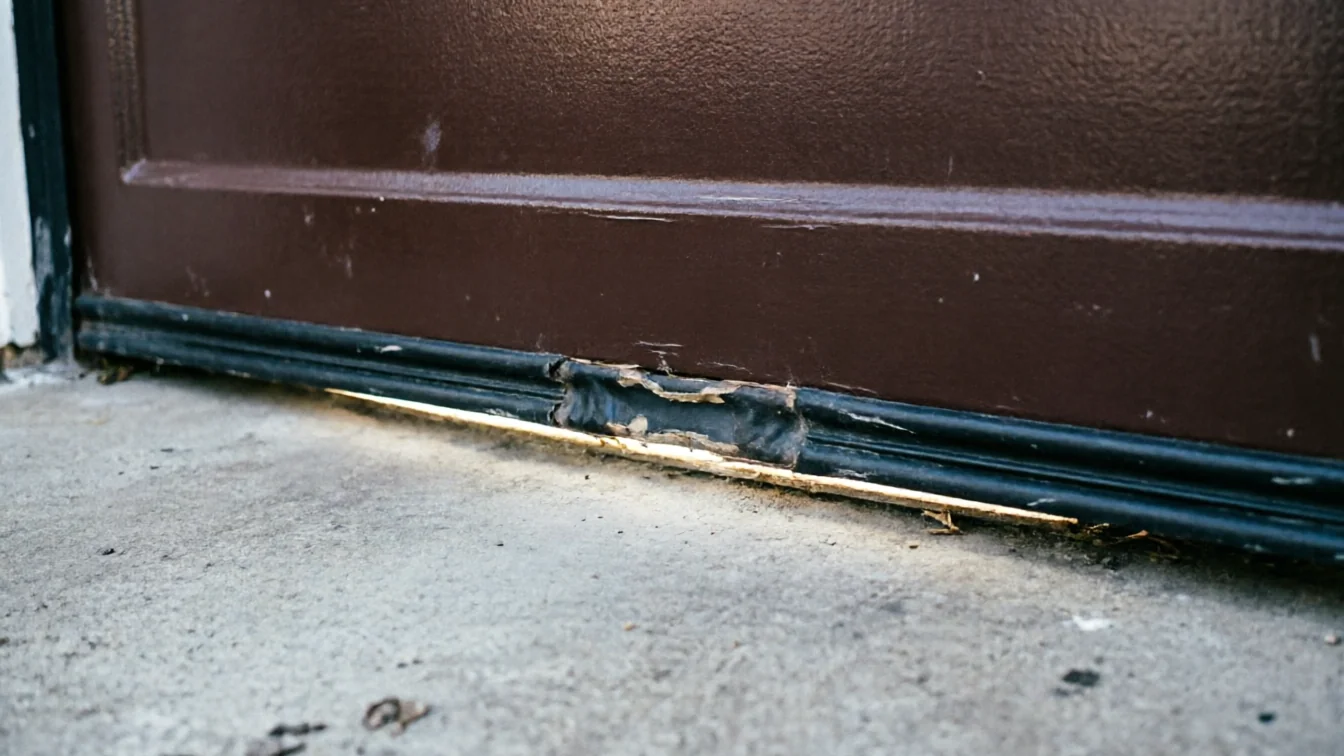
Southfield sits in a cold-severe climate band, and that matters more for garage doors than people expect. It's not the cold itself that wrecks a seal - it's the freeze-thaw cycling. Vinyl bottom seals harden and crack after repeated swings through freezing, and once a seal loses its flex it stops compressing against the slab, which is where your draft starts. On older steel sectional doors common in this housing stock, the same cycling works on the weatherstrip along the side jambs and the top panel, and on doors from the 1950s and 60s that stripping was often never upgraded past what shipped with the house. Condensation is the other half of it: a garage that holds a few degrees above outside temp through a Michigan winter builds moisture on a steel door's interior face, and that moisture finds every gap the old seal isn't closing anymore. None of this is dramatic. It's slow, and it's the reason a door that sealed fine ten winters ago is pulling cold air across the slab now.
The Situation
Southfield's housing dates mostly to 1938 through 1990, with the bulk of it going up before 1960, and that's true across most of the 51 named areas that make up this part of the county. That means most garage doors in town are either original equipment from that build era or a replacement installed without matching the jamb and track to what the house actually needs. Either way, the seal systems on these doors were specified for a different build standard than what's sold off the shelf today, and swapping in a generic strip without checking the retainer channel width or the jamb gap is how a draft problem gets patched instead of fixed. With median household income in the area at $70,185 across roughly 393,720 households, most of what we see is people maintaining a house they plan to keep, not flipping it - which is the right mindset for a seal job, because doing it once, correctly, beats doing it twice.
What Most People Get Wrong
The most common mistake is buying a universal bottom seal at a hardware store and jamming it onto a track profile it wasn't sized for. On the retainer styles common on doors from this era, that produces a seal that looks installed but doesn't compress evenly, so the draft just moves to a different spot along the bottom edge instead of going away. The second mistake is treating the top and side weatherstrip as optional once the bottom seal is replaced - on a pre-1960 jamb with decades of minor settling, the side gaps are often worse than the bottom ones. And the honest limitation here: if the jamb itself has shifted enough that daylight shows along more than a few inches of one side, a seal replacement won't solve it. At that point the fix is adjusting the door's fit to the frame, not another strip of weatherstripping, and we'll say so instead of selling you a seal that won't hold.
Frequently asked questions
Why does my garage door draft worse in the middle of winter than in fall?
Freeze-thaw cycling in a cold-severe climate like Southfield's hardens vinyl seals fast once temperatures start swinging below freezing overnight and above it by day. The seal loses flex, stops compressing fully against the slab, and the gap you're feeling is that loss of contact, not a sudden new problem.
Will a universal weather seal from a hardware store work on my door?
It depends on your retainer track profile. A lot of Southfield doors date to a build era with track and jamb dimensions that don't match current off-the-shelf standards, so a universal seal can look installed without actually compressing evenly along the bottom edge.
Is it worth replacing seals on a door built in the 1950s or 60s?
Usually yes, if the jamb itself is still square. The seal is cheap compared to the heat loss over a winter. The question worth asking first is whether the frame has settled enough that a new seal won't sit flush - that's a different, bigger job.
Related garage door services in Southfield
More garage door guides
Book garage door service in Southfield
Call now or request a quote - tell us what the door is doing and where you are.