
Southfield, MI · Garage Door Service
Panel Replacement for Taylor's 1960s Garage Doors
Taylor's houses mostly date to 1963, a few years past the service area's 1958 median, which shapes what panel stock fits these doors. Here's what that means for cost and timing.
- Repairs & new doors
- Springs & openers
- Serving 8 nearby communities
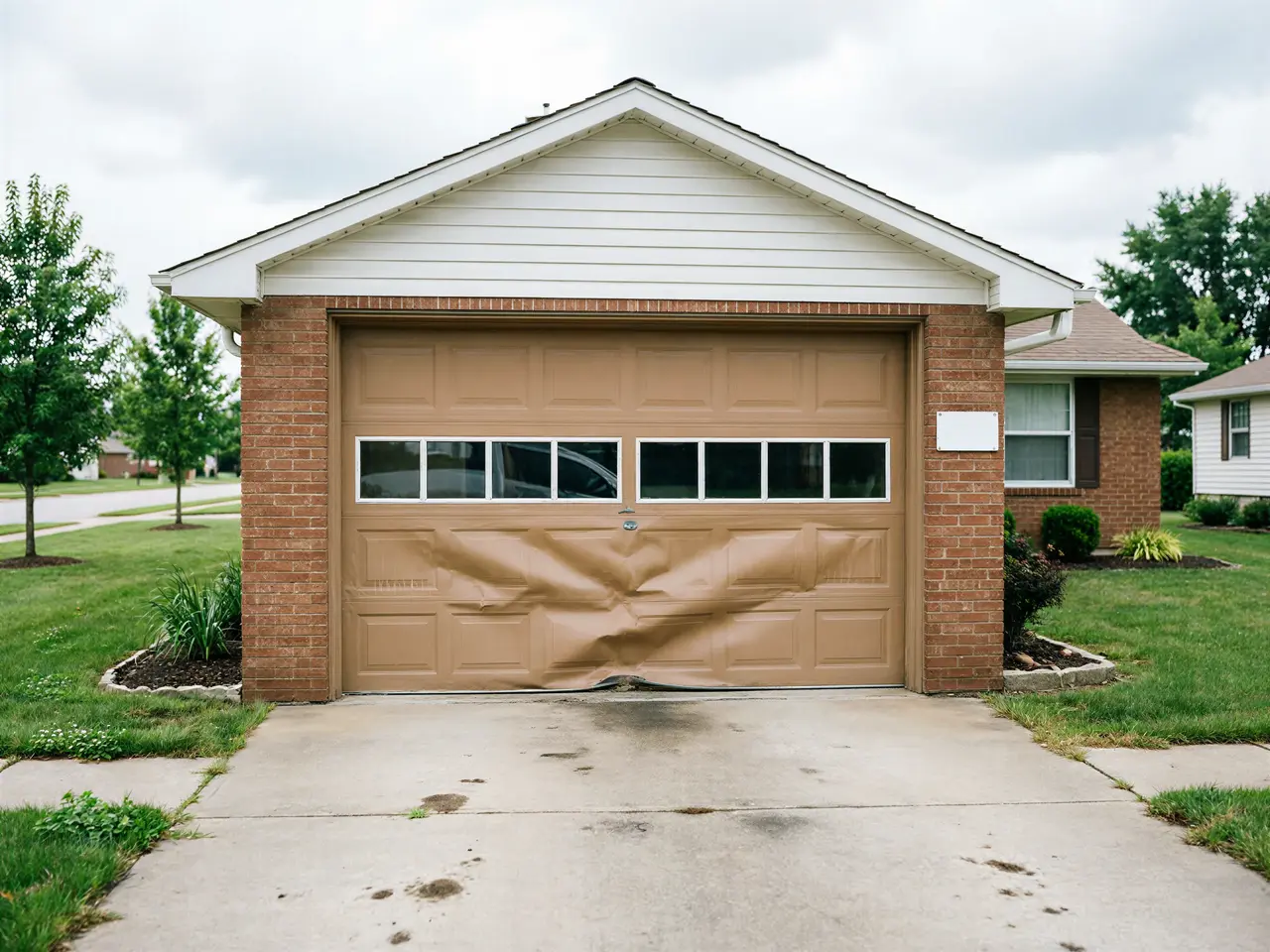
Where This Job Goes Sideways
Most garages in Taylor went up around 1963, which puts them just past the older end of the service area's housing stock (median year built across the wider area is 1958, with pre-1960 construction common in many of the 51 named communities we cover). That handful of years matters more than it sounds like it should. A door built in 1963 is more likely to be an early steel sectional than the wood-over-steel hybrids you still find in older pockets nearby, and the panel widths and seam spacing on those early steel runs don't always match what's stocked today.
Where it goes sideways is matching. One cracked or caved-in panel on a door that age often can't be ordered as a single replacement piece anymore, because the manufacturer changed its panel profile decades ago. We've had to tell homeowners the honest version of that: the panel exists, but not in a size or rib pattern that bolts onto a door this old without reworking the track alignment too. Sometimes that means replacing two adjacent panels instead of one, just so the door tracks straight again. It's not an upsell - it's what the hardware demands.
Booking a Visit
We run out of Southfield, about 17 miles from Taylor, so a panel job here gets scheduled rather than squeezed in as a same-day stop. That's not a knock on the work, it's just the honest distance, and it's worth knowing before you call expecting a truck within the hour. Tell us the door's approximate age (if you know roughly when the house was built, that's usually close enough), the panel size, and whether the damage is cosmetic dents or a full breach that's letting the door sag out of its tracks.
If you can get a clear photo of the manufacturer sticker, usually on the inside edge of a panel or near the bottom bracket, that saves a second trip to confirm the match. For doors from the early 1960s, that sticker is sometimes worn past reading, and in that case we bring a few profile templates on the first visit instead of guessing from a phone photo.
The Cost of This Job
Taylor's median household income sits at $59,537, noticeably below the $70,185 median across the broader service area. That gap shows up in which repair homeowners here actually choose. Where a higher-income area might default to full door replacement at the first sign of trouble, we see more requests in Taylor for matched single or double panel swaps that keep the rest of a serviceable door in play.
We won't quote a number here since it depends on the panel profile, the insulation type, and whether the track needs re-shimming after the swap, but we will say this plainly: if a quote for a full-door job and a two-panel match come out close together, the full door is usually the better dollar. A door held together with mismatched panels from different eras tends to come back as a service call sooner than a door that's uniform.
What Causes It Around Here
The whole service area sits in a severe cold climate band, and that plays out differently depending on the door's age. Steel panels from the early 1960s, before galvanizing and coating standards tightened up, are thinner-gauge than what's made now. Repeated freeze-thaw cycling finds the seams first - the ribbed section where one panel folds into the next - and that's usually where you'll see a stress crack starting, not in the flat face of the panel.
The other driver is simple accumulation. A door installed when the house was built in 1963 has had six decades of door-closing impact at the bottom panel, where a car bumper or a dropped bike pedal does its damage. That panel wears out first, every time, regardless of what's wrong with the rest of the door.
Doing It Yourself
Swapping a single panel on a door this age is not a job we'd talk most homeowners into doing solo, and that's the honest limitation worth stating up front. The fasteners on early 1960s doors are often a different thread pitch than current hardware, and once you've got one panel off, the door's alignment is only as good as how square you get the replacement back in before you torque anything down.
What you can safely check yourself: whether the damage is one panel or has started pulling the track out of plumb (sight down the track from the floor - if it bows, that's not a DIY panel swap anymore, that's a structural call). If it's one clean dent or a single cracked rib with the door still running straight, that's a reasonable candidate for a panel-only fix, done by someone who's matched panel profiles before.
Frequently asked questions
Do you have a crew based in Taylor?
No. We work out of Southfield, about 17 miles away, and cover Taylor along with the rest of the surrounding service area from there. That means panel jobs here get scheduled rather than offered same-day, which is worth knowing before you call.
Can you match a panel on a door from the early 1960s?
Often, but not always as a single piece. Manufacturers changed panel profiles over the decades, so a door built around 1963 sometimes needs two adjacent panels replaced together to keep the seams and track alignment consistent, rather than one panel bolted in alone.
Is it cheaper to replace one panel or the whole door?
Depends on the quote, but if a full-door price comes in close to a two-panel match, the full door is usually worth it long-term. A door with mismatched panel ages tends to generate another service call sooner than a uniform one.
Book garage door service in Southfield
Call now or request a quote - tell us what the door is doing and where you are.